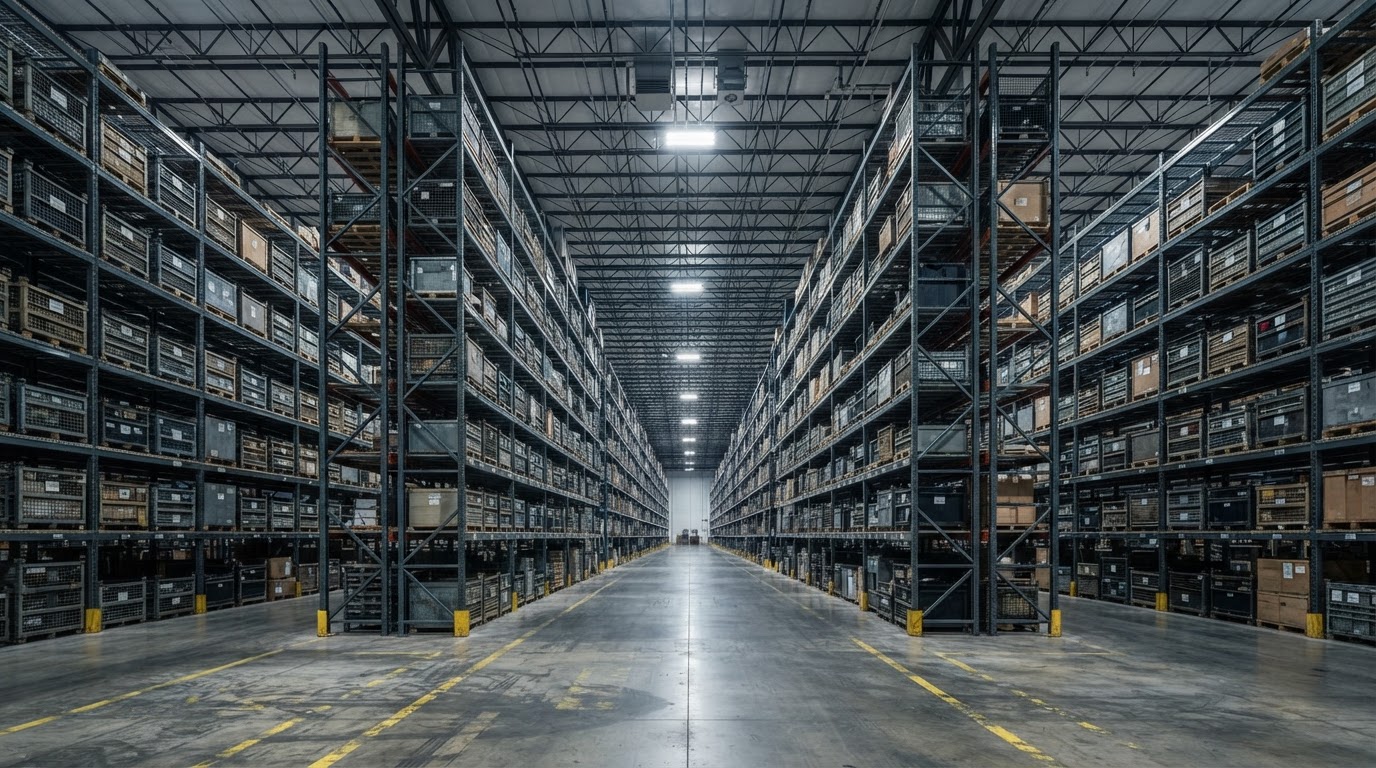
After years of supply chain disruption, many organizations reached for the same answer: hold more inventory. That is resilience by stockpile, and it is expensive, blunt, and often unnecessary. Real resilience is a process-design question — building a supply chain that can absorb disruption without resorting to buffers — and it is an administrative discipline, not a purchasing tactic.
The stockpile response is understandable: when the chain breaks, more inventory is the most visible defense. But it is also the most expensive, because it carries the cost of the buffer in perpetuity, against disruptions that may never come. The process-design response is harder to build and cheaper to run, because it builds the ability to respond into the chain itself — and that ability is an asset, where the stockpile is a cost.
The design choices that build resilience
Resilience by design is a set of administrative choices about how the supply chain is structured, contracted, and managed. Each choice trades a small efficiency in normal conditions for a large resilience in disrupted ones — and the trade is worth making when the cost of disruption exceeds the cost of the efficiency given up.
- Supplier diversification so a single failure doesn't halt the line — the administrative cost of managing multiple suppliers, bought against the risk of one.
- Visibility across tiers so disruption is seen early, not when it arrives — the administrative cost of mapping the chain, bought against the cost of surprise.
- Flexibility in routing and fulfillment so the chain can reroute around a break — the administrative cost of building the option, bought against the cost of the single path.
- Service-level agreements that hold vendors accountable to recovery, not just delivery — the administrative cost of the contract, bought against the cost of the vendor's failure.
- Inventory positioned by risk, not by habit — buffer where disruption is likely, lean where it isn't.
Why it is an administrative discipline
Resilience built this way costs less than stockpiling and works better under stress. It is also, fundamentally, an administrative improvement — redesigning the processes, contracts, and controls that govern how the supply chain operates day to day. The work is not in the warehouse; it is in the contracts, the supplier relationships, the visibility systems, and the governance that makes the chain a managed system rather than a set of transactions.
This is why supply chain resilience sits in general management consulting rather than pure logistics. The logistics function can move the goods; the management discipline designs the chain that moves them — and the design is what determines whether the chain bends or breaks when the disruption arrives. The logistics is the execution; the administrative design is the resilience.
The visibility that makes it work
Resilience by design depends on visibility — the ability to see disruption coming, not just to react when it arrives. Visibility is an administrative investment: mapping the supply chain across tiers, instrumenting the key nodes, and building the review rhythm that catches the signal early. The investment is unglamorous and continuous; the return is the disruption that was avoided rather than the one that was survived.
- 1Map the supply chain to the tier where the risk concentrates — often tier two or three, not tier one.
- 2Instrument the key nodes — lead times, fill rates, financial health of the supplier.
- 3Build a review rhythm that surfaces the signal early, not just the dashboard that reports the result late.
- 4Define the triggers that activate the contingency — the decision points, not just the plans.
The resilience that pays for itself
The deepest case for resilience by design is that it pays for itself. The stockpile costs money in perpetuity; the designed chain costs money once, in the administrative work of building it, and then runs leaner than the stockpiled alternative. The resilience is not a cost the organization carries; it is a capability the organization owns — and a capability, unlike a stockpile, compounds in value as the chain grows.
“Resilience by stockpile is a cost you carry forever, against a disruption that may never come. Resilience by design is a capability you build once, that pays for itself in the lean running it enables. The first is a bet; the second is an investment.